John Murphy’s staged apartment fire
The Mystery of The Invisible DogJohn Murphy’s staged apartment fire turns an apparent rescue into a clue to the burglary. The blaze is first read as an ordinary accident, and Murphy is carried out unconscious; only later does Jupiter Jones explain that Murphy had arranged the fire himself to obtain a hospital alibi. Its significance lies in that reversal: the emergency that seems to make Murphy another victim of the crime is part of his own attempt to conceal it.
The Fire in the Courtyard
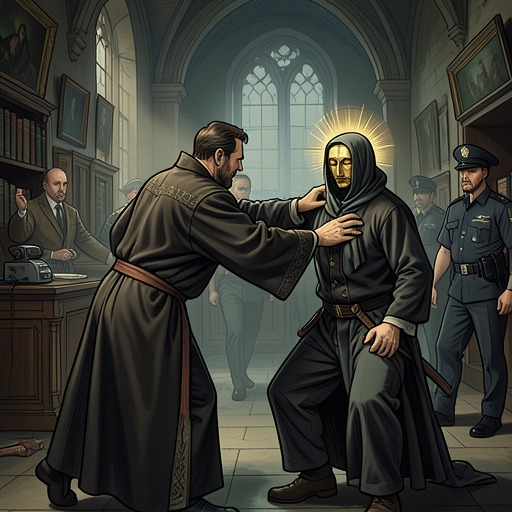
The alarm comes from inside Fenton Prentice’s apartment: breaking glass is heard through the closed balcony door, followed by shouts that there is a fire. The group rushes out. At courtyard level, flames are burning on the curtains in John Murphy’s windows. Sonny Elmquist, barefoot and with his hair standing on end, is already smashing the windows with an iron pool chair. Pete Crenshaw grabs a second chair, while Jupiter Jones and Bob Andrews follow toward the courtyard. Fenton Prentice turns back to call the fire brigade.
The response is improvised and immediate. Jupiter spots a fire extinguisher in a niche beside the stairway and uses it on the curtains. The flames die, but smoke remains inside. The boys and Sonny climb through the broken window; Jupiter sprays the smouldering sofa beside it and then the Christmas tree beyond. That last precaution matters: the fire captain later points out that the tree is real and that, had the flames reached it, the whole apartment could have gone up quickly.
Inside the smoke-filled apartment, Murphy does not answer the boys’ calls. Jupiter and Pete crouch low and advance through the fumes, finding him collapsed in the doorway between the living room and bedroom. Pete tries to rouse him, but Murphy does not stir. Still crouching, the boys haul him toward the entrance, with Sonny unlocking the door. Murphy is dead weight, and they carry him out to the Paseo Place apartment courtyard pool, where he lies pale-faced in the sun. The danger is not merely an apparent cover story: at the time of the rescue, the fire and smoke are real, and Murphy is unconscious.
The Accident Explanation and Its Reversal
The fire captain offers the explanation that initially makes the episode look routine. He displays a half-burned cigarette, wet with extinguisher foam, and says that Murphy must have fallen asleep smoking: the cigarette dropped onto the sofa, smouldered, and set the curtains alight. Sonny’s quick intervention, the captain says, may have saved the apartment’s occupant. This account fits the visible scene, including the burning sofa and curtains, but it does not establish that the fire began accidentally.
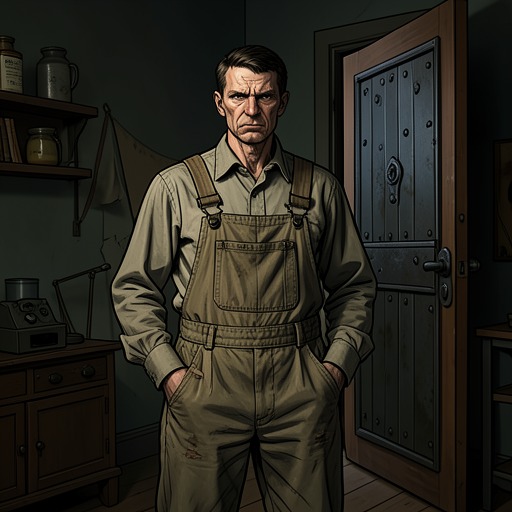
Jupiter later rejects the accident as the true explanation. He recalls that Murphy was careful with his cigarettes, so the blaze had seemed suspicious to him from the start. Yet Murphy’s apparent injury and lack of an obvious connection to the pool made him look like another person endangered by the burglar, rather than the burglar himself. The fire’s staged appearance thus helped Murphy: it supplied a convincing public explanation for the danger while turning attention away from his possible role in the theft.
From Rescue to Alibi
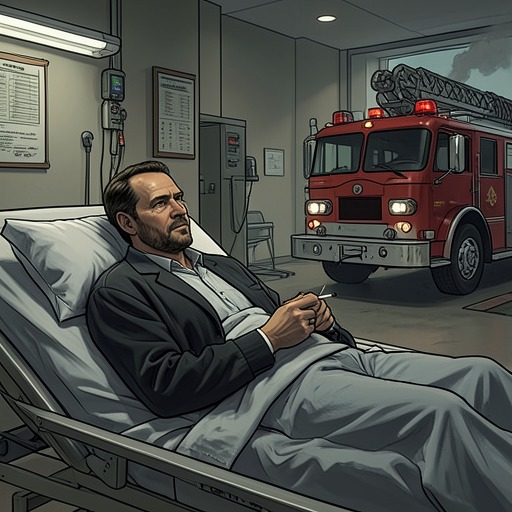
Jupiter’s eventual account identifies the purpose of the fire. Murphy set it himself because he wanted an excuse to be in a private hospital. The timing made that refuge useful: between Christmas and New Year, Jupiter explains, there would be few patients, and Murphy could learn the nurses’ routines and slip in and out without close observation. The nurses wanted him to rest, which further reduced the likelihood that they would scrutinize his movements. Murphy was not genuinely hurt; the appearance of a fire victim gave him cover rather than leaving him dependent on treatment.
At first, the fire pointed Jupiter toward a different suspect. Because the boys had not been watching their closed-circuit television monitor carefully when the blaze began, Jupiter considered whether Alex Hassell might have entered Murphy’s apartment and set it. In that theory, Hassell could then go to a motel and establish an alibi, while the fire removed a potential witness. Murphy’s seeming victimhood and lack of an apparent connection to the pool made that alternative plausible enough to delay Jupiter’s certainty.
The ransom instructions overturn that suspicion. The money is to be left in the waste-paper bin in Paseo Place Park at exactly five o’clock, the established Five o’clock cat-feeding time for Hassell. Jupiter reasons that Hassell would not choose a time when his absence would be noticed, even if he were willing to keep the cats waiting. The timing therefore points away from Hassell and toward Murphy. Seen in this sequence, the apartment fire is not an isolated act of arson: it is the false alibi that temporarily obscures the culprit, while the ransom arrangement supplies the clue that exposes him.
Consequences and Narrative Function
The immediate consequence is a narrow escape from a potentially fatal blaze. The boys’ extinguisher work and Sonny’s window-breaking effort stop the fire from spreading; the captain specifically warns that the real Christmas tree could have carried the flames through the apartment. Murphy is taken away by ambulance, and the incident appears to confirm that he has suffered an emergency rather than engineered one. That appearance is precisely what makes the fire useful to him as concealment.
The later explanation changes the meaning of the rescue without erasing its physical stakes. Murphy’s unconsciousness, the smoke, and the danger to the apartment remain real within the scene, but the supposed accident is exposed as part of his scheme. The fire consequently serves two functions in the mystery: it provides Murphy with the hospital’s relative privacy and makes Jupiter consider Hassell as a possible arsonist. Its shift from apparent misfortune to deliberate deception marks a decisive turn in the investigation, linking Murphy’s hospital alibi to the theft and ransom plot.